The #1 most trusted sorcery publication since 500 C.E.
Modern Broom Innovations
by Octavia Vex
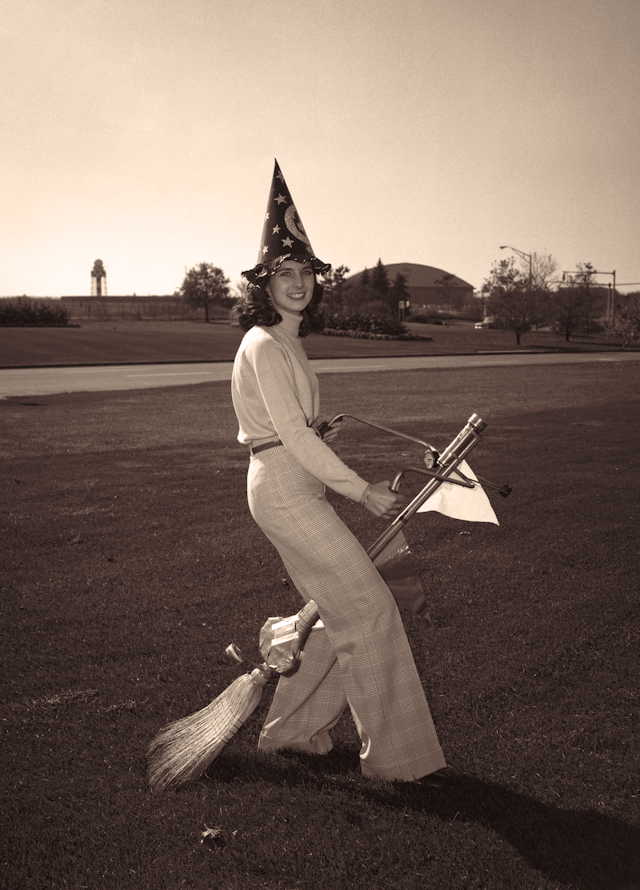
Photo by Unseen Histories on
UnsplashThe humble broom—once a simple bundle of twigs for sweeping hearths and a ritual object
for moonlit
flights—has entered an era of quiet sophistication. A new generation of broomcraft blends
centuries-old enchantment with cutting-edge engineering, transforming household implements into
commuter-ready skycycles. From ergonomic handlebars to whisper-quiet propulsion systems, these
advances are reshaping how mages move through urban skies and what it means to be a modern broomist.
Design: form meets function
At first glance, contemporary broom design retains familiar lines: a tapered shaft, a resilient
brush, and a balance point tuned to a rider’s center of gravity. Beneath that retro silhouette,
however, lie deliberate changes driven by comfort, safety, and everyday usability. Ergonomic
handlebars, lined with temperature-regulating materials reduce wrist strain and allow for longer,
more comfortable commutes; an important consideration for those who spend hours airborne between
districts.
Propulsion and stealth
Propulsion has evolved beyond the old-world burst-and-coast spells. Whisper-quiet propulsion
systems—combining silent low-thrum impellers with dampened charm matrices—offer reliable thrust
without announcing every departure to the neighbors below. These systems prioritize linear,
low-vibration output to protect sensitive cargo (and temperamental pets). Importantly, noise
reduction has enabled later curfews and opened night-time lanes previously restricted to noisy
craft.
Energy sources vary by preference and patchwork of local regulations: rechargeable ley condensers
for those prioritizing sustainability, quick-swap mana canisters for commuters needing fast
turnarounds, and hybrid configurations for extended ranges. Battery-smiths and runewrights
collaborate to optimize weight distribution, so added capacity does not compromise balance or
handling.
Safety and regulation
With greater capability comes renewed emphasis on safety. Integrated passive safety
features—collapsible landing struts, auto-leveling seat charms, and emergency glide wards—are
appearing as standard equipment. Many new models include proximity sensors that trigger gentle
corrective spells when another craft intrudes into a set buffer zone. In denser urban centers, broom
manufacturers are working with civic regulators to implement lane-assist enchantments that guide
riders along designated air corridors during high-traffic hours.
Training is also adapting. Flight academies now teach broomcraft ergonomics and systems management
alongside traditional aerial etiquette and spellcraft. Insurance firms offer reduced premiums for
riders using certified stabilization and collision-avoidance packages, driving wider adoption among
practical commuters.
Aesthetic and cultural shift
Perhaps as notable as the technical innovations is the cultural reimagining of broom use. What was
once associated with ritualistic or whimsical flights has become decidedly mainstream and stylish.
Customizable LED rune panels—programmable strips of soft, rune-laced light—allow riders to signal
turns, display guild colors, or simply express personal flair on night routes. These panels can be
tuned to regulatory visibility standards while doubling as wearable public art.
Manufacturers are capitalizing on the appetite for personalization: hand-bound grain finishes,
anodized shaft inlays, and even scent-misting nodes that release tailored atmospheres—citrus for
morning commutes, lavender for late shifts. The broom is now both a practical conveyance and a
statement piece, fitting seamlessly into the wardrobes and toolkits of modern urban mages.
The path ahead
As broomcraft becomes more integrated into daily life, designers face the twin challenges of
accessibility and sustainability. Lower-cost stabilization packages and modular upgrades promise to
bring innovations to a broader audience. Meanwhile, research into recyclable components and low-draw
propulsion aims to minimize environmental and arcane-resource footprints.
Modern broom innovations are doing more than making flight smoother; they are reasserting the broom
as an adaptable technology that honors tradition while embracing modern needs. For commuters
navigating crowded city spires or evening markets, these advances offer safer, quieter, and more
stylish passage—an evolution that suggests the broom’s next century of flight will be as practical
as it is magical.
The humble broom—once a simple bundle of twigs for sweeping hearths and a ritual object for
moonlit
flights—has entered an era of quiet sophistication. A new generation of broomcraft blends
centuries-old enchantment with cutting-edge engineering, transforming household implements into
commuter-ready skycycles. From ergonomic handlebars to gyro-stabilized shafts and whisper-quiet
propulsion systems, these advances are reshaping how mages move through urban skies and what it
means to be a modern broomist.
Foreseeing possible futures can be a blessing and a burden: every avoided mistake spawns new
doubts,
and
knowing outcomes often erodes spontaneity and trust. Scryers report paralysis by
probability—endless
rituals to confirm visions, then second-guessing every choice. This piece examines ethical
dilemmas,
the
toll on relationships, and frameworks for using foresight responsibly.
A familiar is a mirror and a companion: its temperament shapes your magic, rituals, and
routines.
Successful bonds grow from consistent care, clear signals, and shared quiet moments. Whether
winged,
scaled, or entirely mundane, familiars enhance perception, amplify intent, and teach patience;
this
article outlines selection, communication techniques, and daily practices to strengthen the
partnership.
The perfect lair balances secrecy, comfort, and defensibility: concealed access, sturdy shelter,
and
clear
sightlines deter threats. Proximity to fresh water, food sources, and materials lowers
logistical
strain. Thermal stability, layered entry points, and simple alarms enhance safety. This article
covers
site selection, low-impact fortifications, and routines to maintain secrecy and long-term
habitability.